


2014: Barcelona
Eleven years ago, Manohar and I took a whirlwind trip to Barcelona. We ran nonstop around the vibrant city and even squeezed in a side trip to Montserrat, the mountain range near Barcelona, famous for the Benedictine Monastery of Santa Maria de Montserrat.
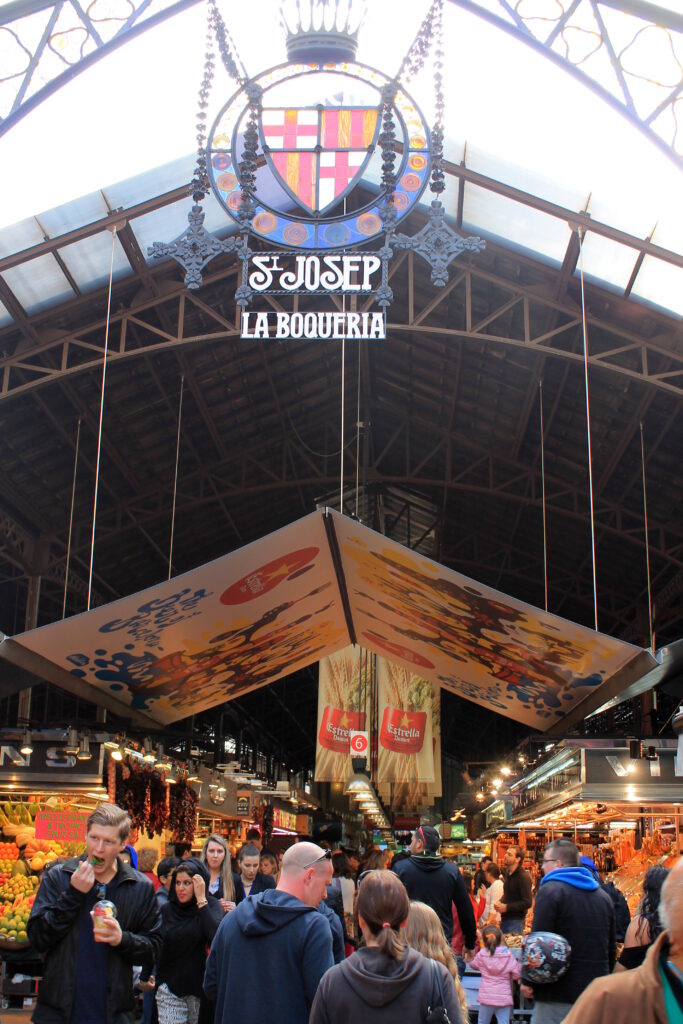
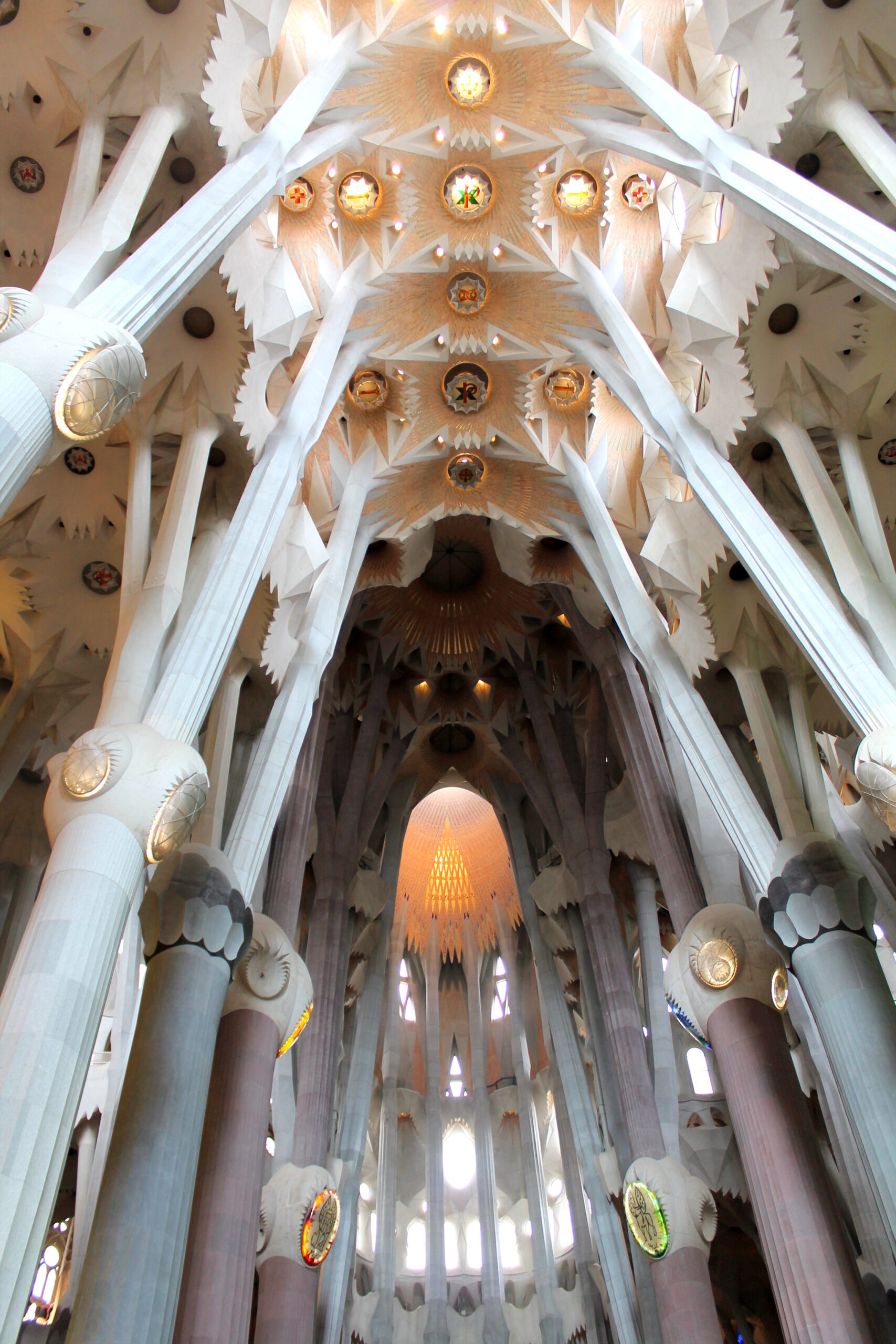
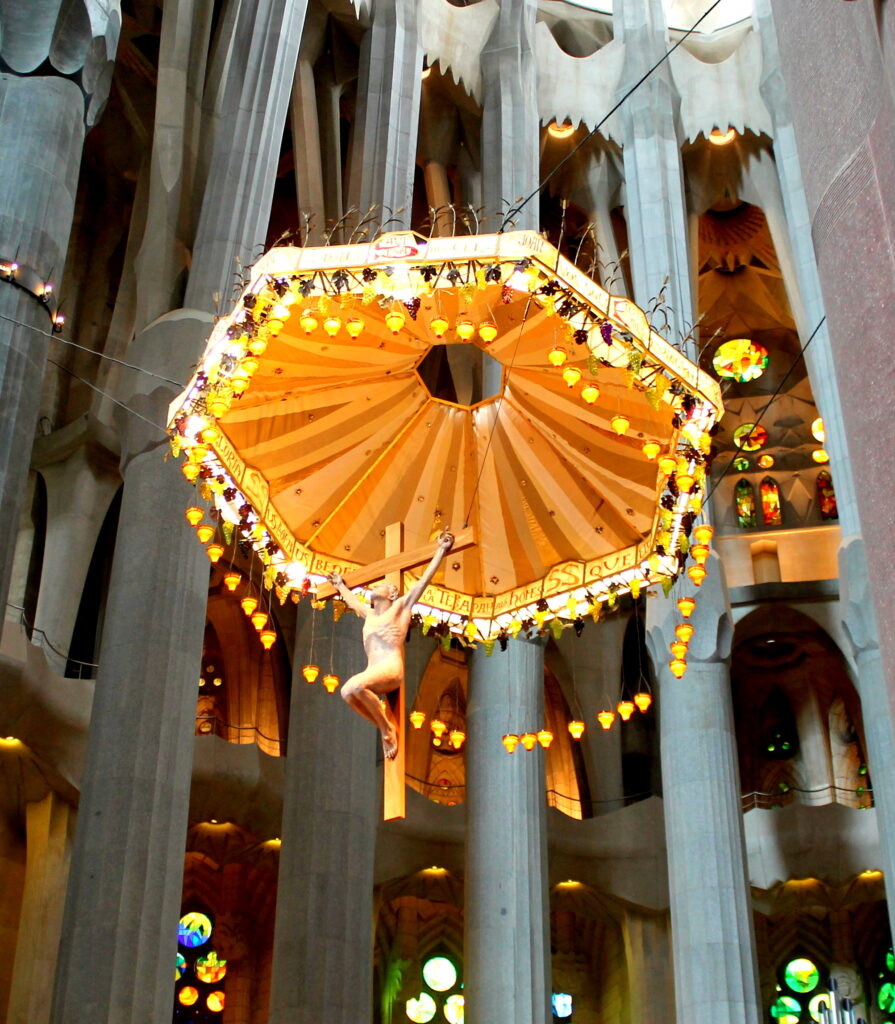
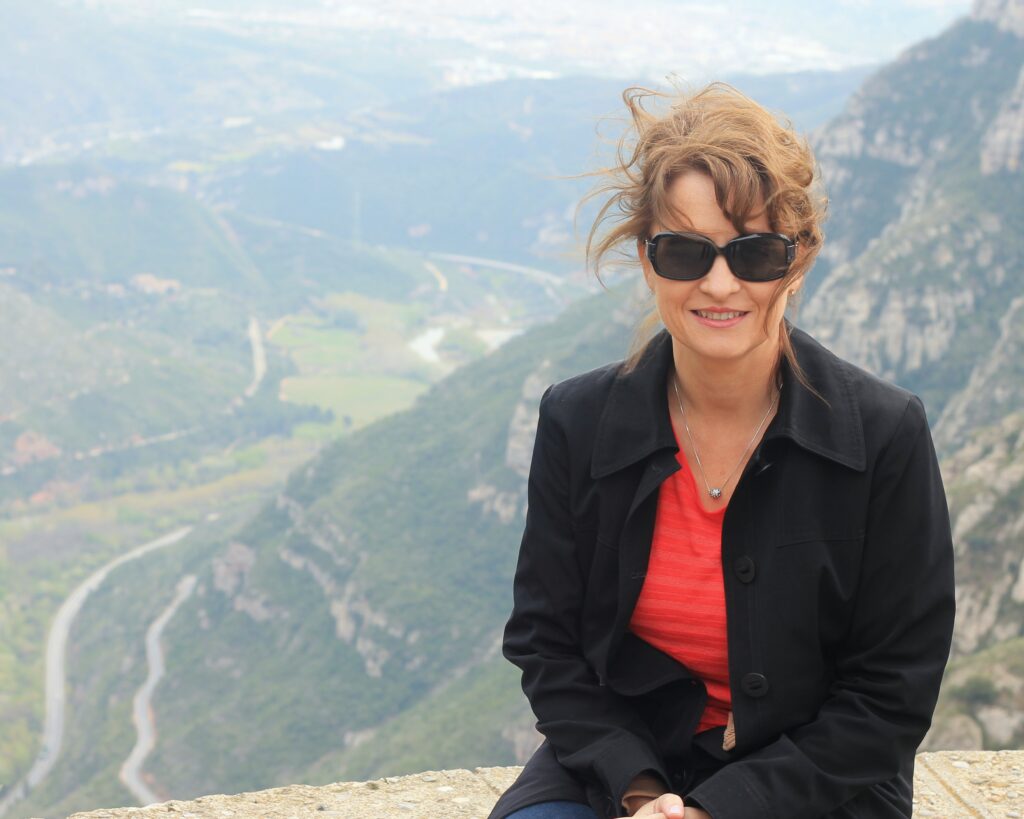
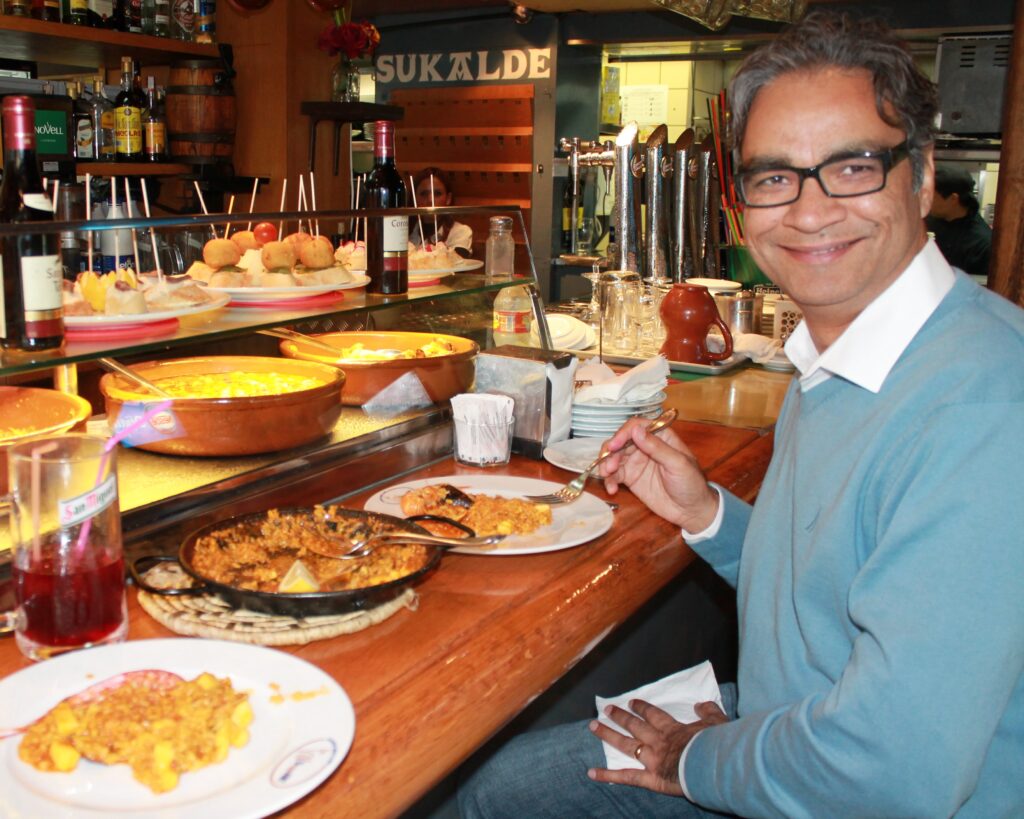
We loved our time in Spain but felt we had barely scratched the surface. We promised to return someday to explore further afield.
2025: Valencia
This time we signed a 2-month apartment lease and made the sunny city of Valencia our home base for exploring Spain.
Oranges everywhere!
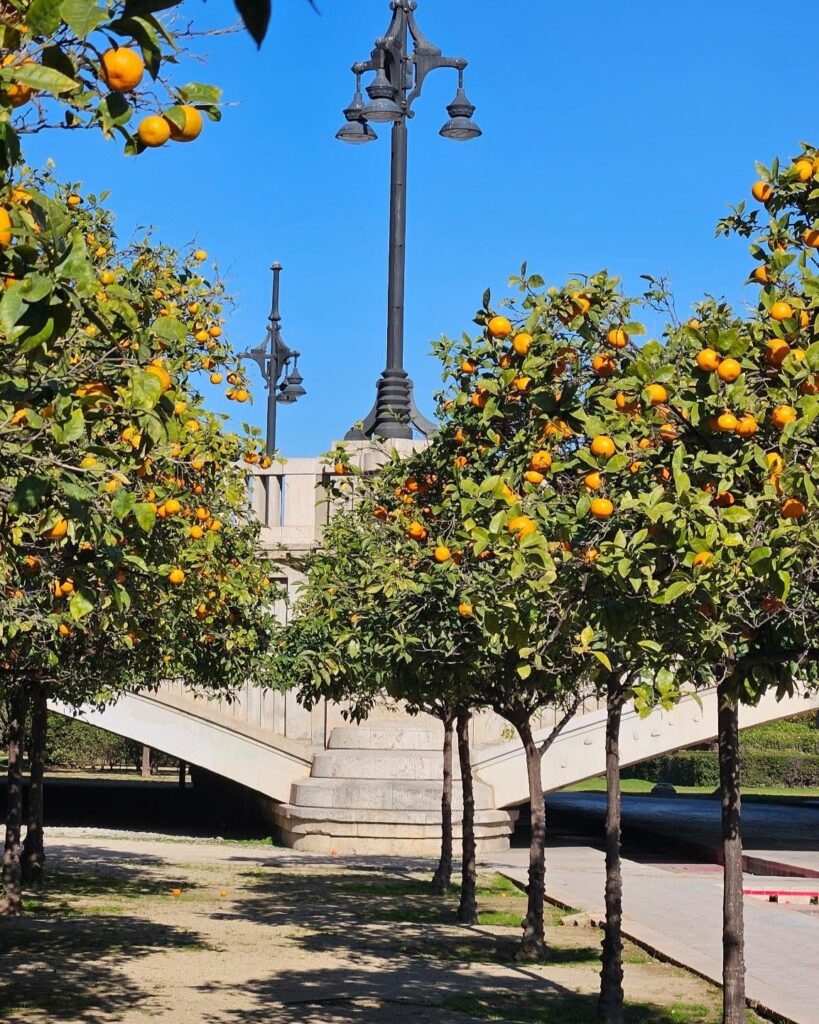
We arrived just in time to see the street-lined trees bursting with vibrant oranges. As we walked past, an orange would occasionally drop to the ground. It was tempting to pick one up, but we held back because we weren’t sure of the rules. Later, we learned that these ornamental oranges are far too bitter to eat. They were originally brought to the region by Moorish sultans, who used them to decorate their palaces and mosques.
The Turia Gardens
Our apartment was near The Turia Gardens (Jardin del Turia). The gardens stretch 5.5 miles (9 K) over a former riverbed that was diverted in the 1950s due to a devastating flood.
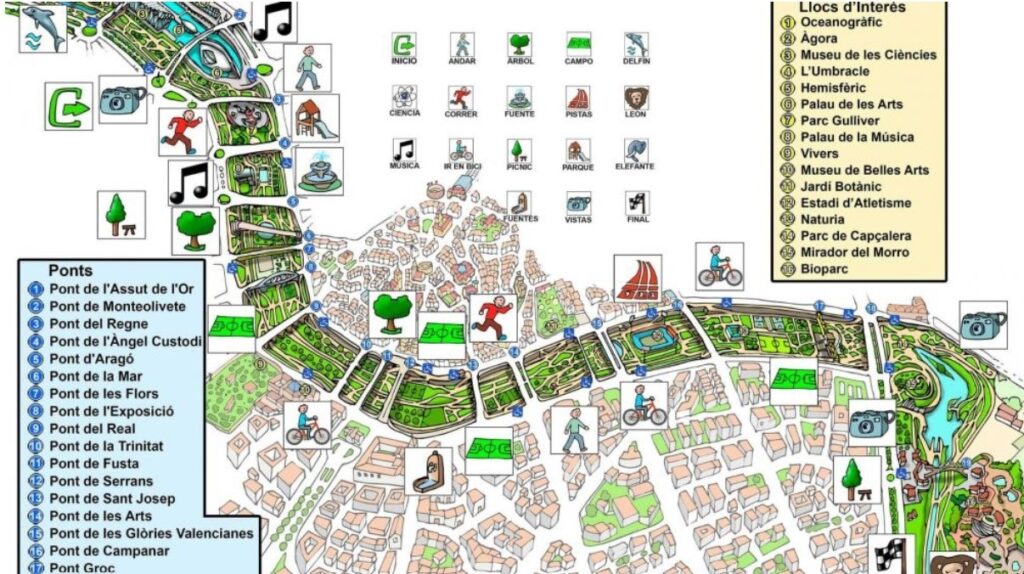
Among the park’s ample paths, ponds, and playgrounds, are 18 bridges crossing the former river — dating back to the 15th, 16th, and 17th centuries. From the park, you can cross bridges directly to major attractions including Old Town and the City of Arts and Sciences.
Old Town
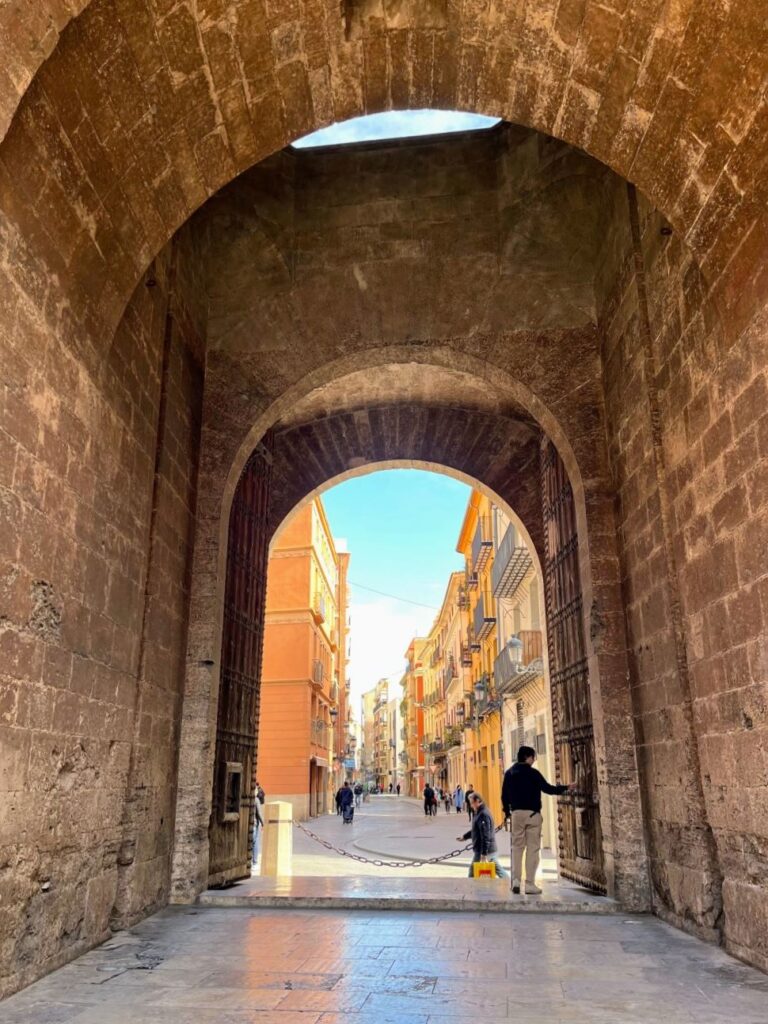
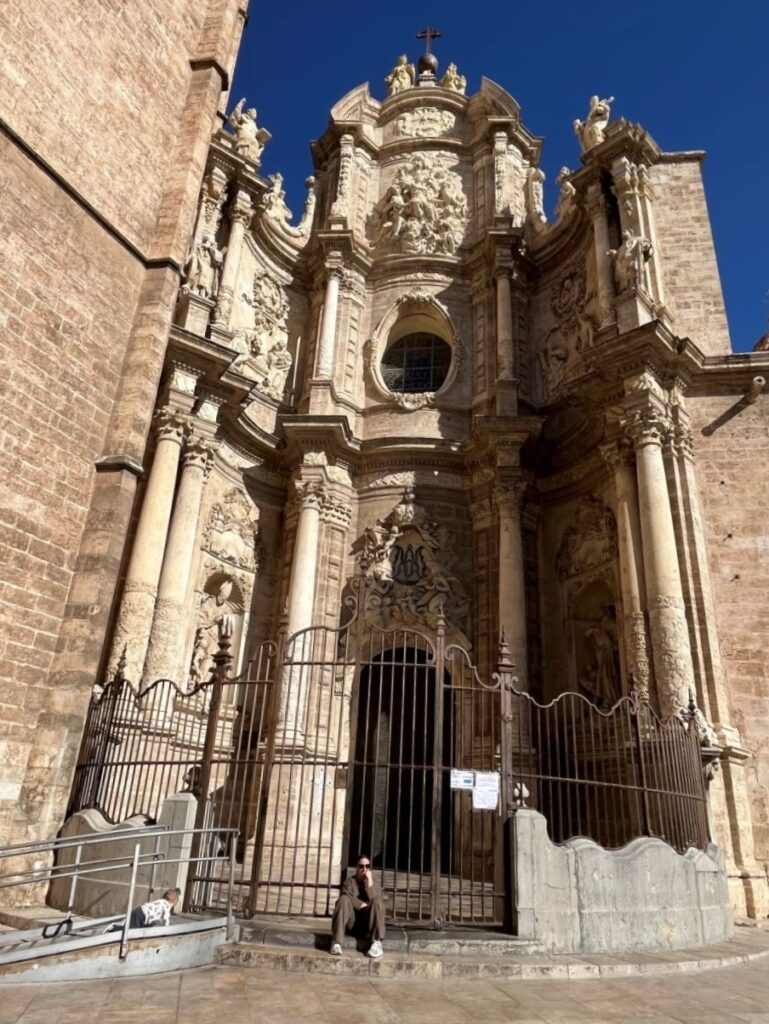
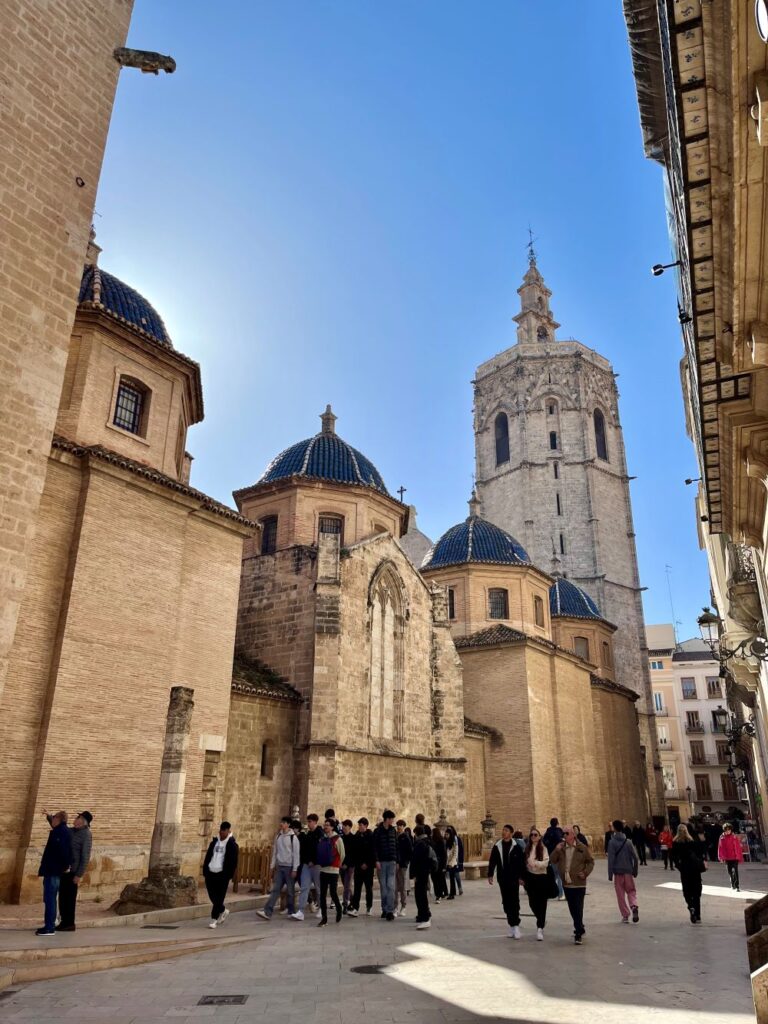
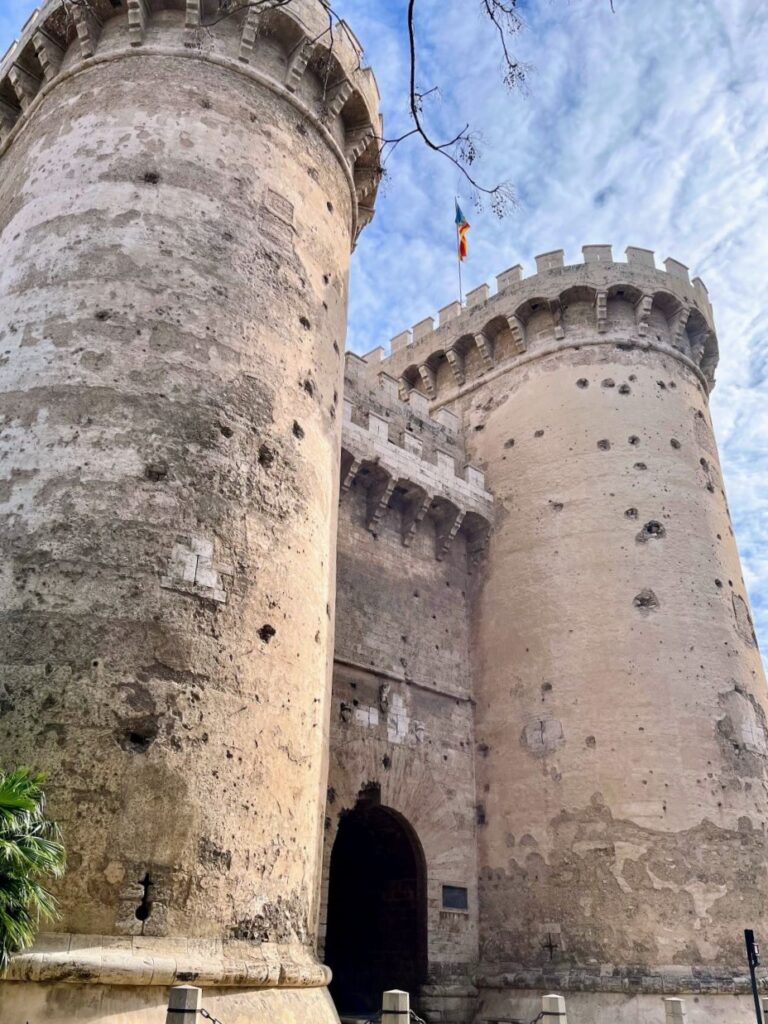
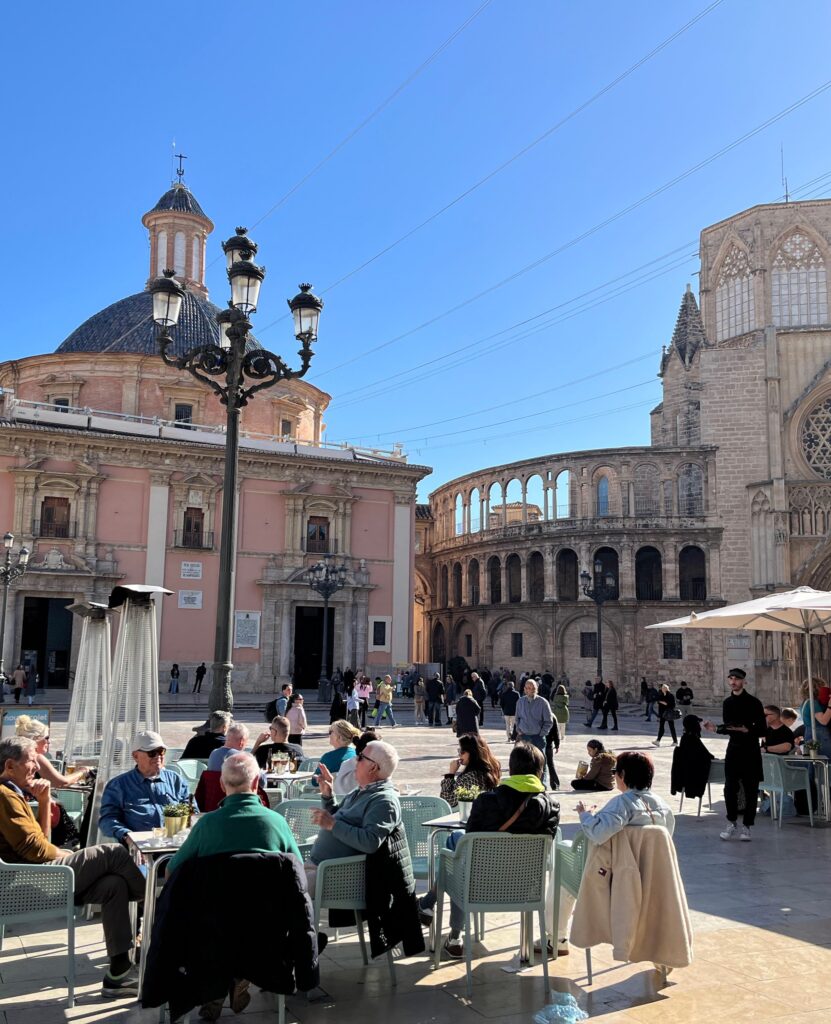
Old Town Valencia is enclosed by remnants of a medieval wall, with two of its original access gates still standing. Notable landmarks include the 13th-century Valencia Cathedral, which was constructed on the site of an ancient Roman temple that later became a mosque. The cathedral is also known for housing the Holy Grail. Also, the San Nicolás Church in Valencia, often referred to as the “Sistine Chapel of Valencia,” is renowned for its breathtaking Baroque frescoes
City of Arts and Sciences
Contrasting the ancient history of Old Town, The City of Arts and Sciences (Ciudad de las Artes y las Ciencias, or, CAC) is a sprawling campus of space-age buildings situated at the southern end of the Turia Gardens,
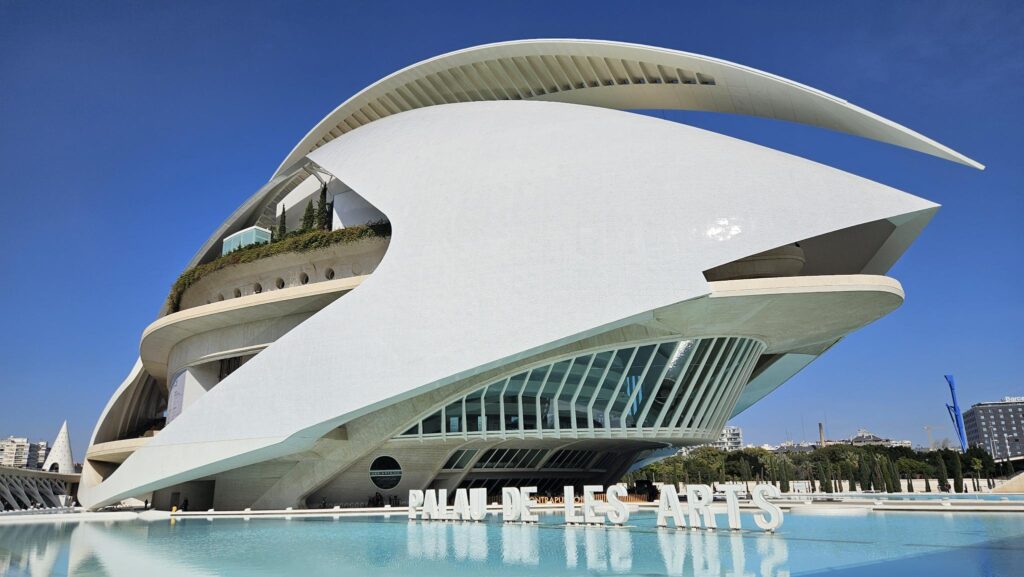
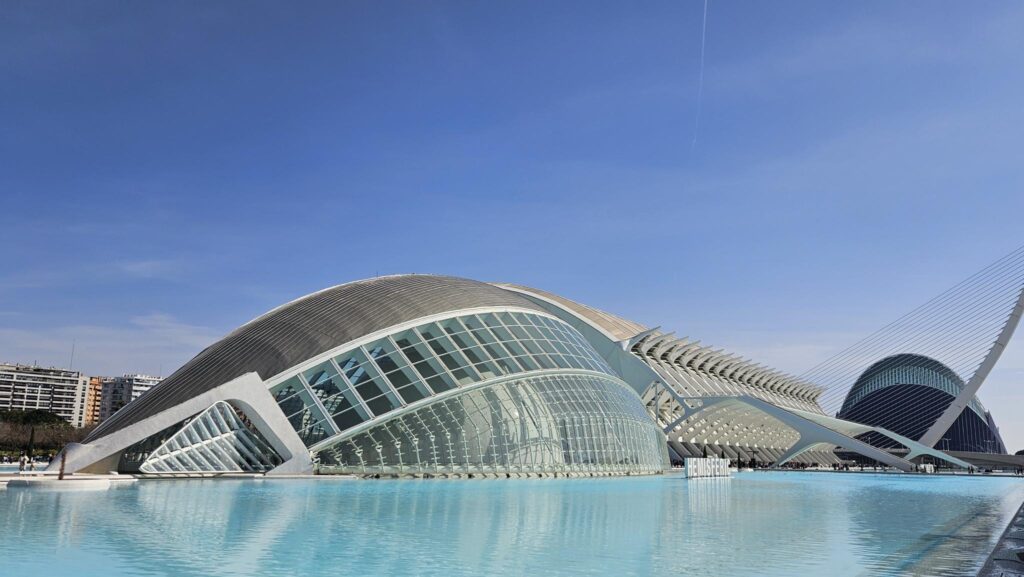
The CAC comprises six sections covering 1.25 miles (2K) including an opera house, IMAX cinema and planetarium, a science museum, and Europe’s largest aquarium. Fun fact, Disney filmed its movie “Tomorrowland” here!
Out and About!
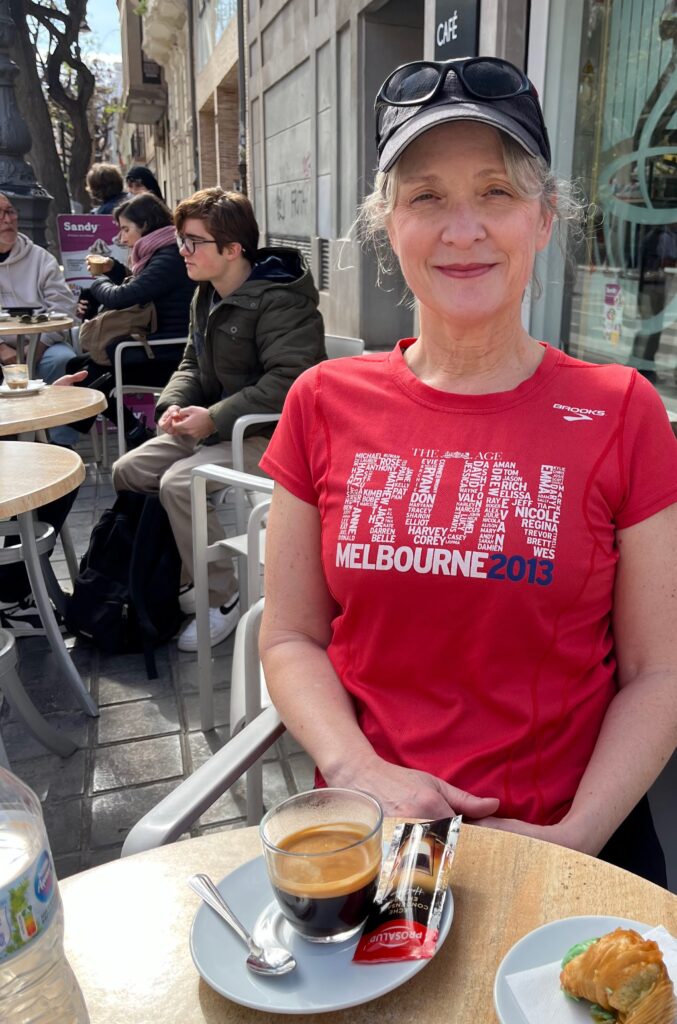
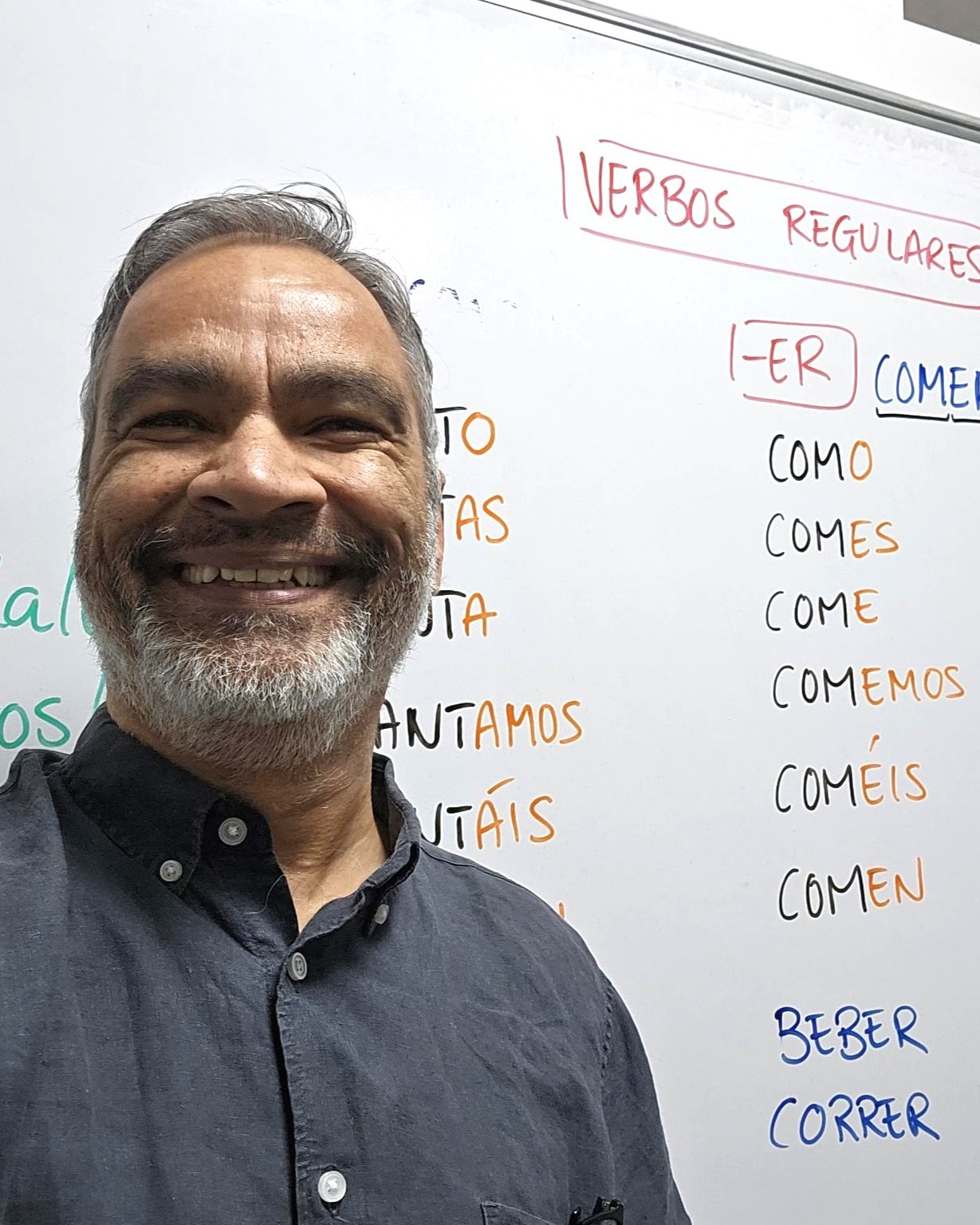
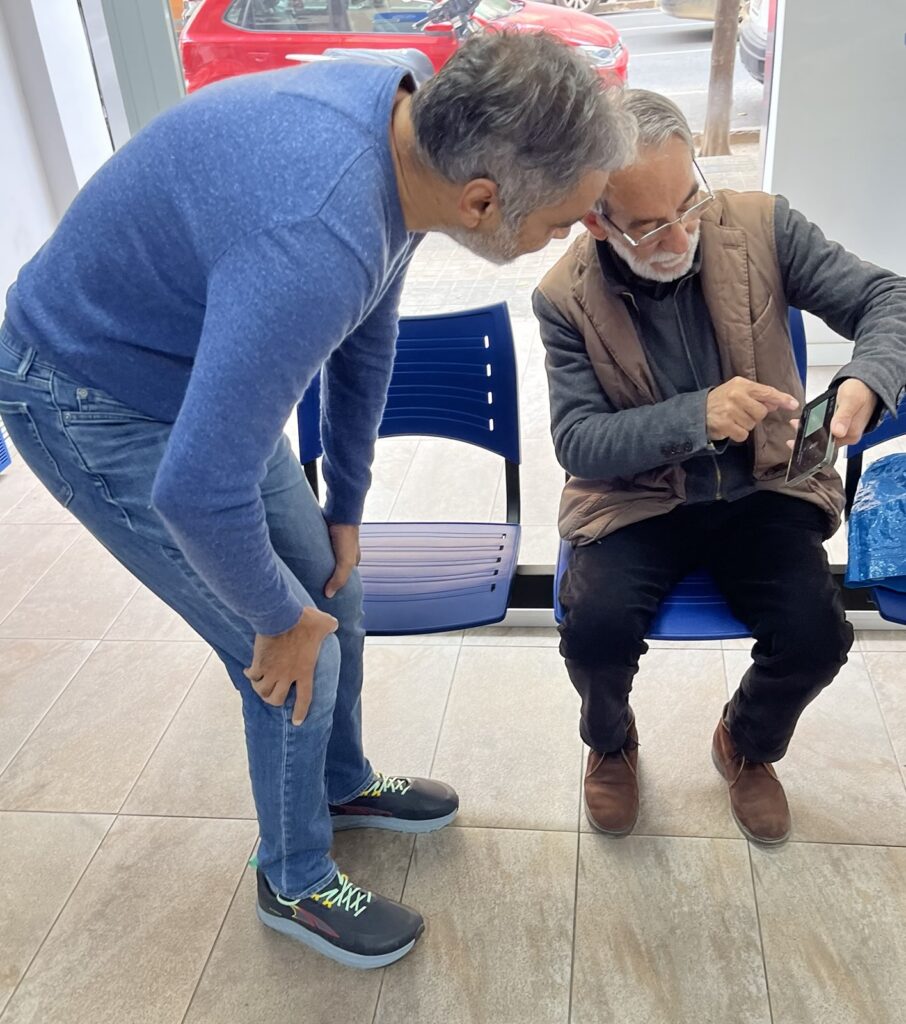
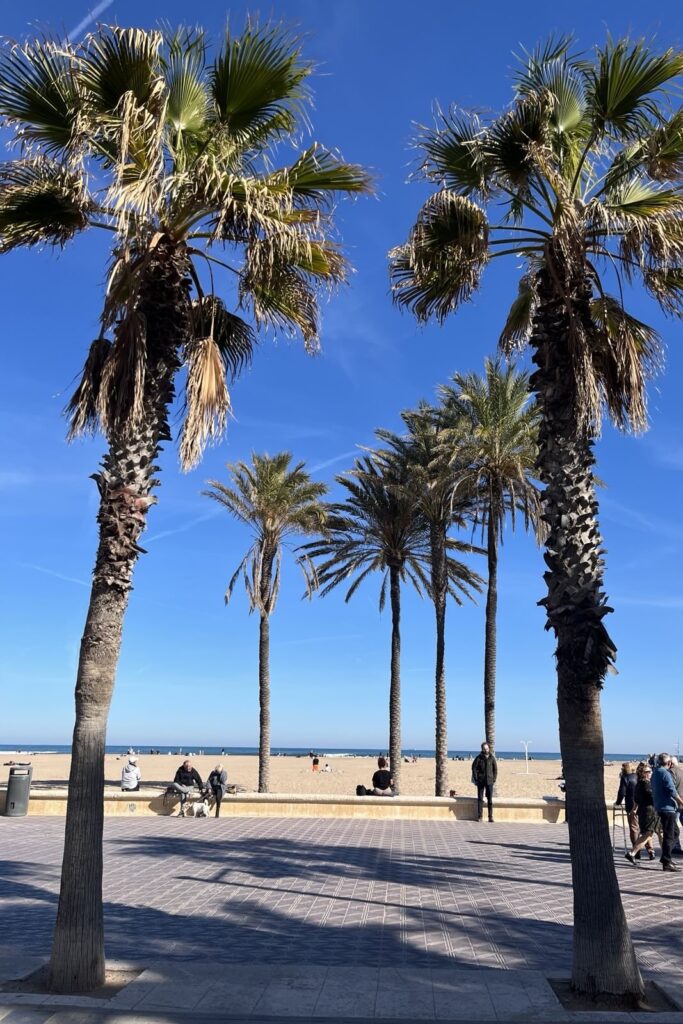
Sunny and 60°F (16°C) in February was delicious! We spent time outdoors every single day. We’d run in the park, grab a coffee afterward, and Manohar would head to his daily Spanish class. On weekends, we joined the locals in their love for outdoor adventures, cultural events, and delicious food.
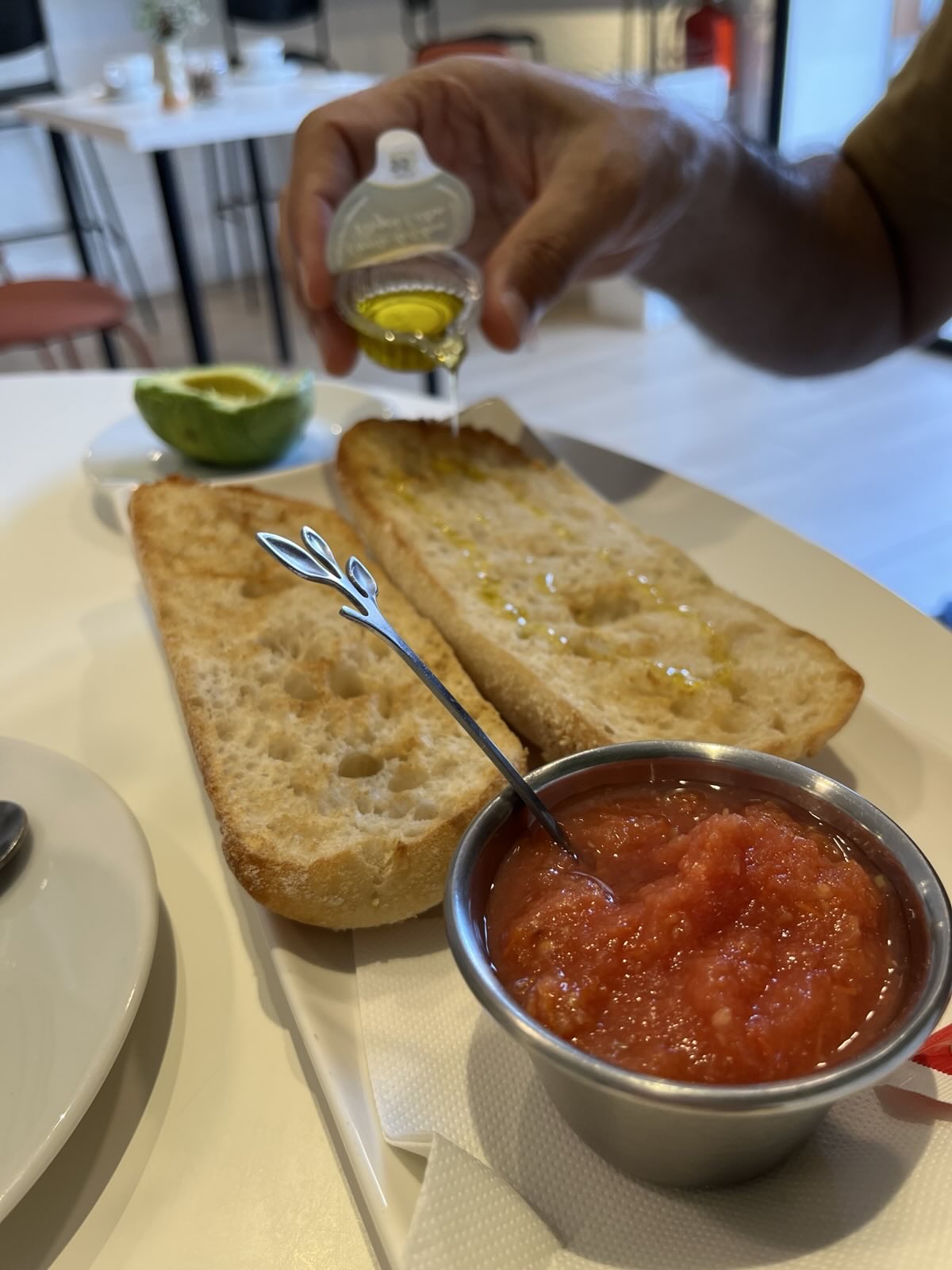
Horchata and Fartons
One of the best parts of traveling is getting to try local food. It’s not just about tasting new flavors—it’s a way to really connect with the culture. Food tells a story about a place, from its history and traditions to its values.
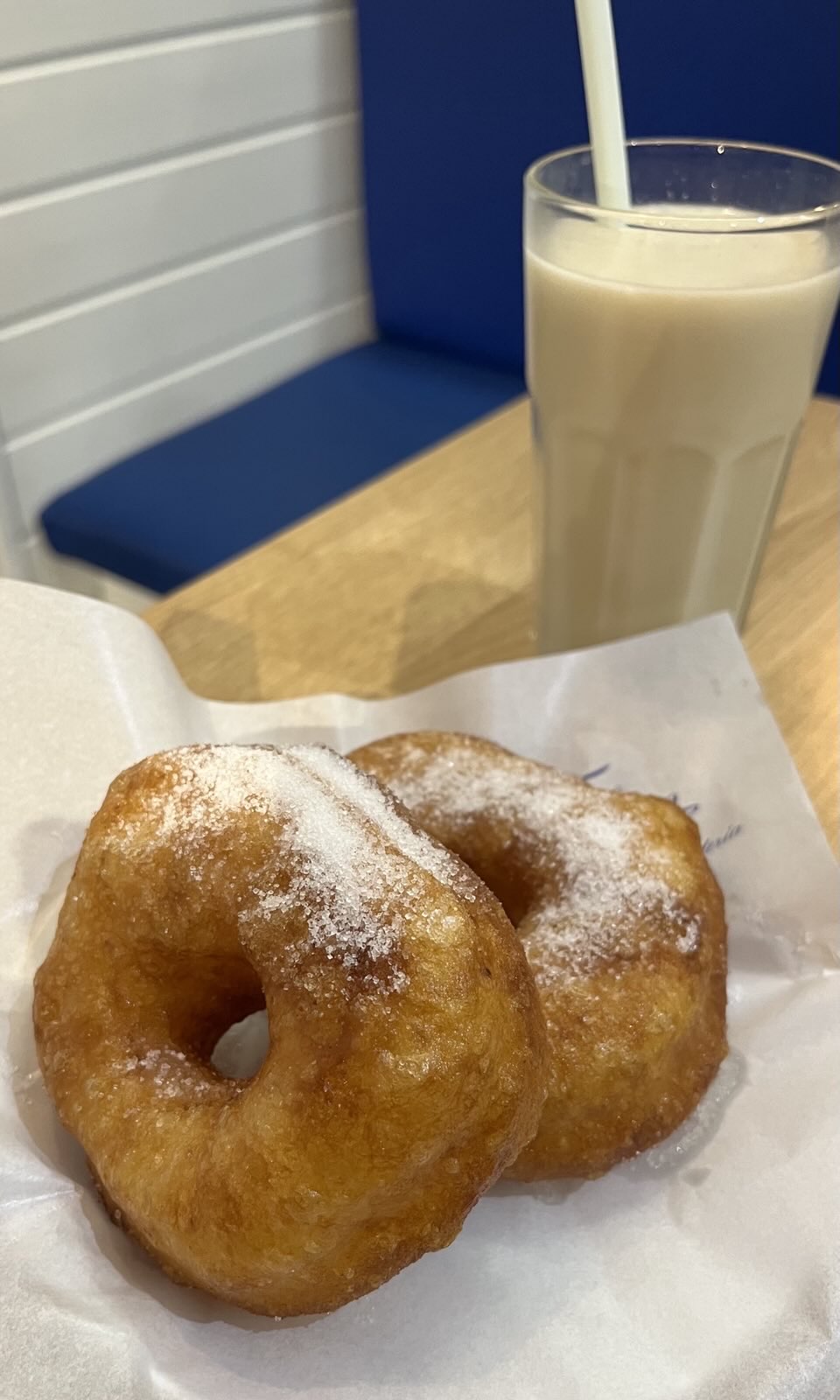
Horchata, made from tiger nuts, is a cherished sweet, non-alcoholic beverage that Valencians grow up enjoying. Though it’s especially popular during the sweltering summer months, it’s readily available year-round in Valencia.
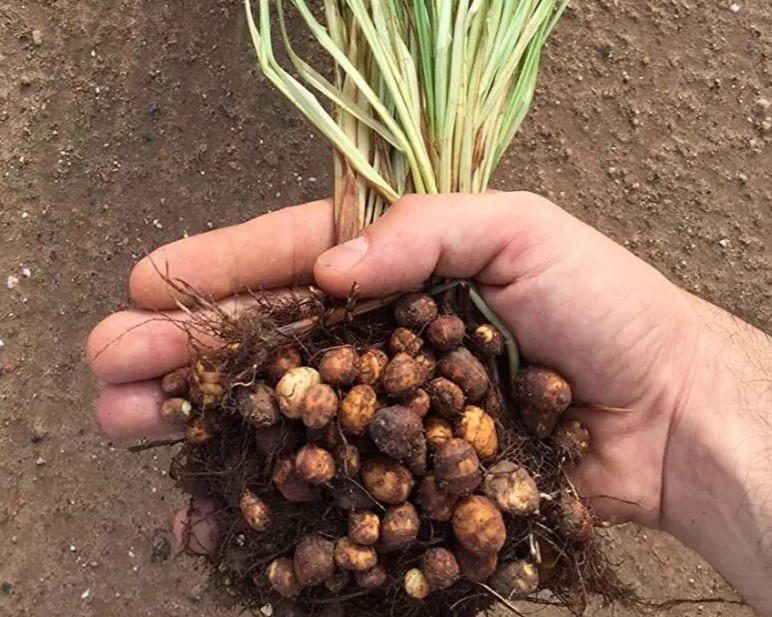
The Arab Moors introduced tiger nuts from North Africa, and Valencia’s perfect weather and rich soil made it easy to grow them. The first mention of a horchata-like drink in Valencia goes all the way back to the 13th century!
Valencia horchata is still made from ground tiger nuts — which are not a nut at all. They are small, wrinkled tubers from the edible root vegetable. (Note: Later, the Spanish brought horchata to the Americas during colonization but adapted it to use local ingredients like rice and cinnamon instead of tiger nuts.)
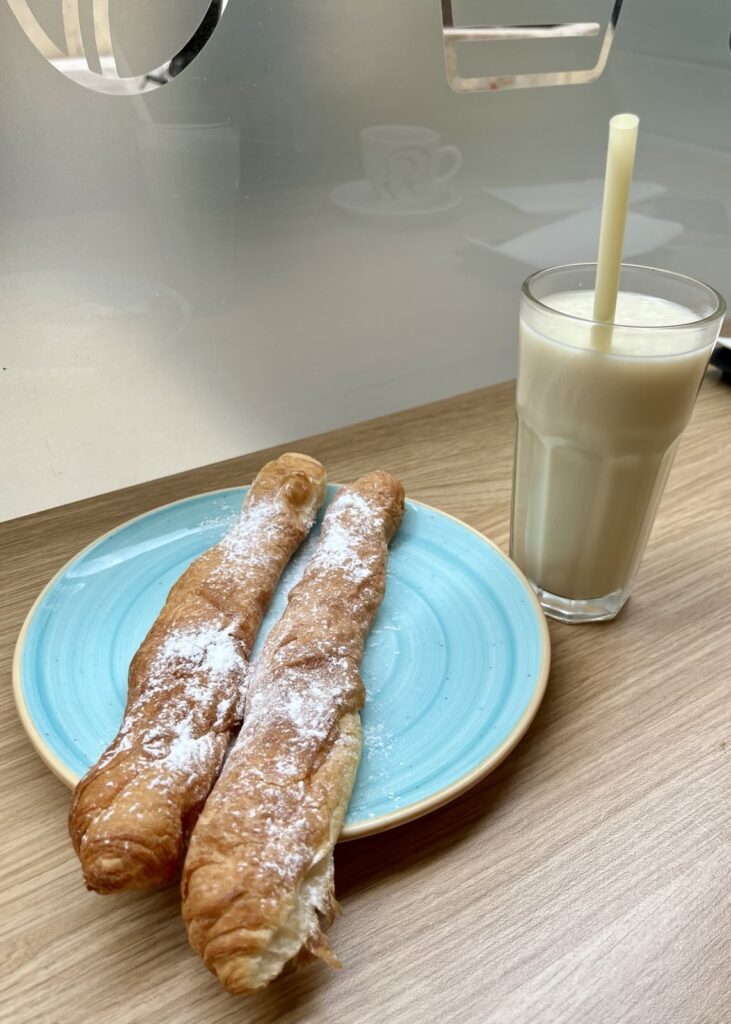
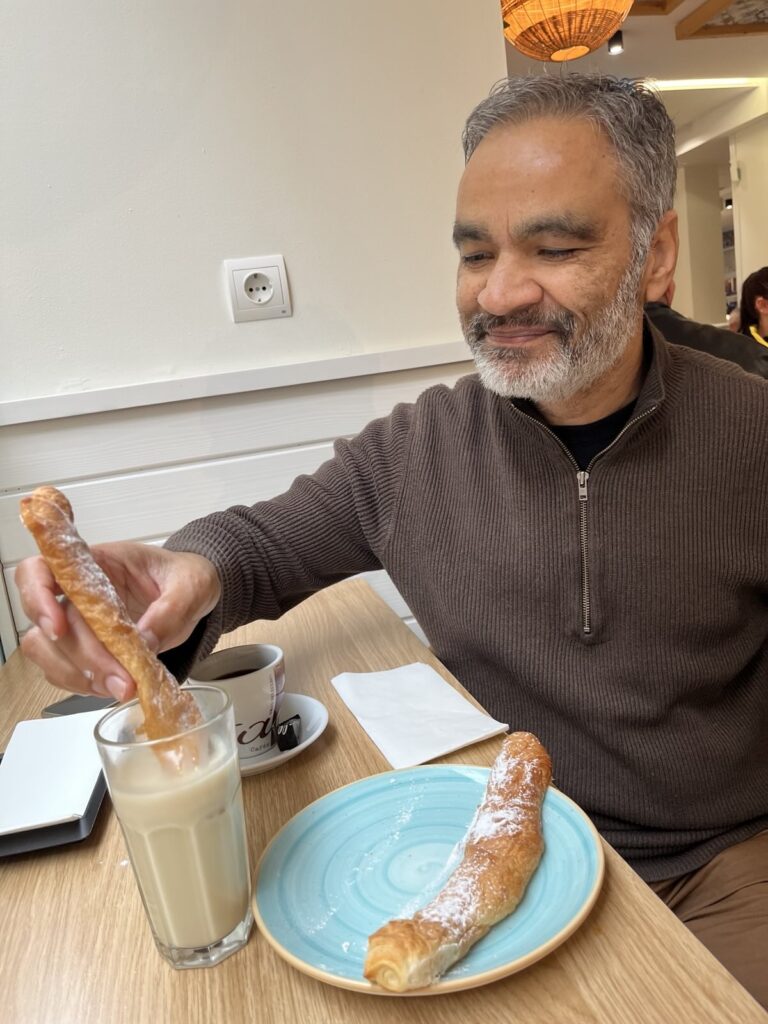
The farton (which rhymes with “carton”) is a light, sweet pastry from Valencia, created in the 1960s by the Polo family, who lived next to a tiger nut field. They wanted the perfect snack to go with horchata, so they ditched the traditional hard, crunchy breadstick and came up with a soft, spongy one that soaks up the drink. The name “farton” comes from the Valencian word “fartar,” meaning “to provide in abundance.”
Buñuelos
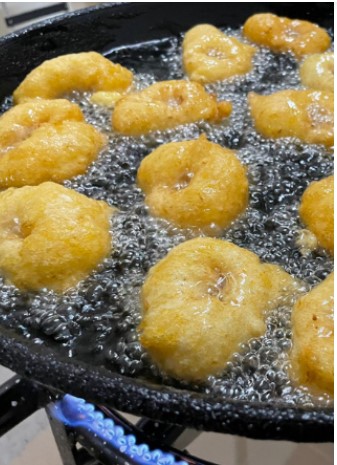
Buñuelos are kind of like French beignets or a less sweet North American doughnut, and they’re traditionally made with pumpkin. A Moorish baker came up with them back in the 11th century, and they’ve been a favorite ever since! You can enjoy them on their own or dipped in thick drinking chocolate. Just be sure to ask for “los buñuelos calientitos!” As our host put it, “If they’re not hot, they lose half their flavor!”

Things don’t always go as planned
If there’s anything we’ve learned since traveling full-time, it’s to be flexible.
Shortly after we arrived, I started to notice itchy spots on the back of my hand. The next morning, I woke up with spots on my neck. I stopped in to speak to a pharmacist and she suggested soap for sensitive skin. She said tourists sometimes have trouble with the high calcium levels in the water.
The spots continued to grow in size and number so I made an appointment with a Spanish dermatologist. He guessed I had picked up scabies from the public park and prescribed two medications for both Manohar and I to take. He said they would take two weeks to work.
Over the next two weeks, the spots multiplied, blistered, and seeped. I questioned several times whether the medications were working or not.
Then, after noticing teeny-tiny spots of blood on the bedsheets, I feared the worst. We lifted the mattress and we discovered the culprit—bed bugs. We had been sleeping with those guys for THREE weeks! Arghhh!
We left the apartment immediately and checked into a hotel. The hosts said the apartment would need at least two treatments, one week apart. In any case, I couldn’t imagine returning to that bed. Needing to heal and desiring to see my regular dermatologist back in the States, we scrapped the rest of our trip and flew home. Our trip to Andalusia would have to happen on a future visit.
The day after returning to the States, I saw my doctor. He said the patterns of welts on my body were a telltale sign of bed bug bites. Apparently, they bite…munch…walk…bite…munch…walk—in a straight line. My allergic reaction was so severe that I needed an antihistamine and a steroid cream.
Fortunately for Manohar, he did not react to any bug bites at all. However, in hindsight, my reaction was probably a blessing as it made us aware of the infestation before we unknowingly carried any stowaways to our next destination.
“Sleep tight, don’t let the bed bugs bite,” is no joke!
Note: The links we provided on wanderfulretirement.com are for general informational purposes only; they do not constitute an endorsement. Unless otherwise credited, all of the pictures are owned by wandefulretirement.com and cannot be used without permission. Pictures taken in public are for general information only and are not meant to be invasive.
Looks like you + Manohar are having a great time globe-trotting. Neither the pharmacist nor the doctor recognized the bites! Hopefully they are uncommon + you don’t meet them ever again!
Thanks for these fine pictures of Spain!
I always knew Manohar is rather tick, oops, thick skinned 😉 Jokes apart, sorry to see you had to cut short your stay.
Better luck for your next globe trotting destination. Enjoy!